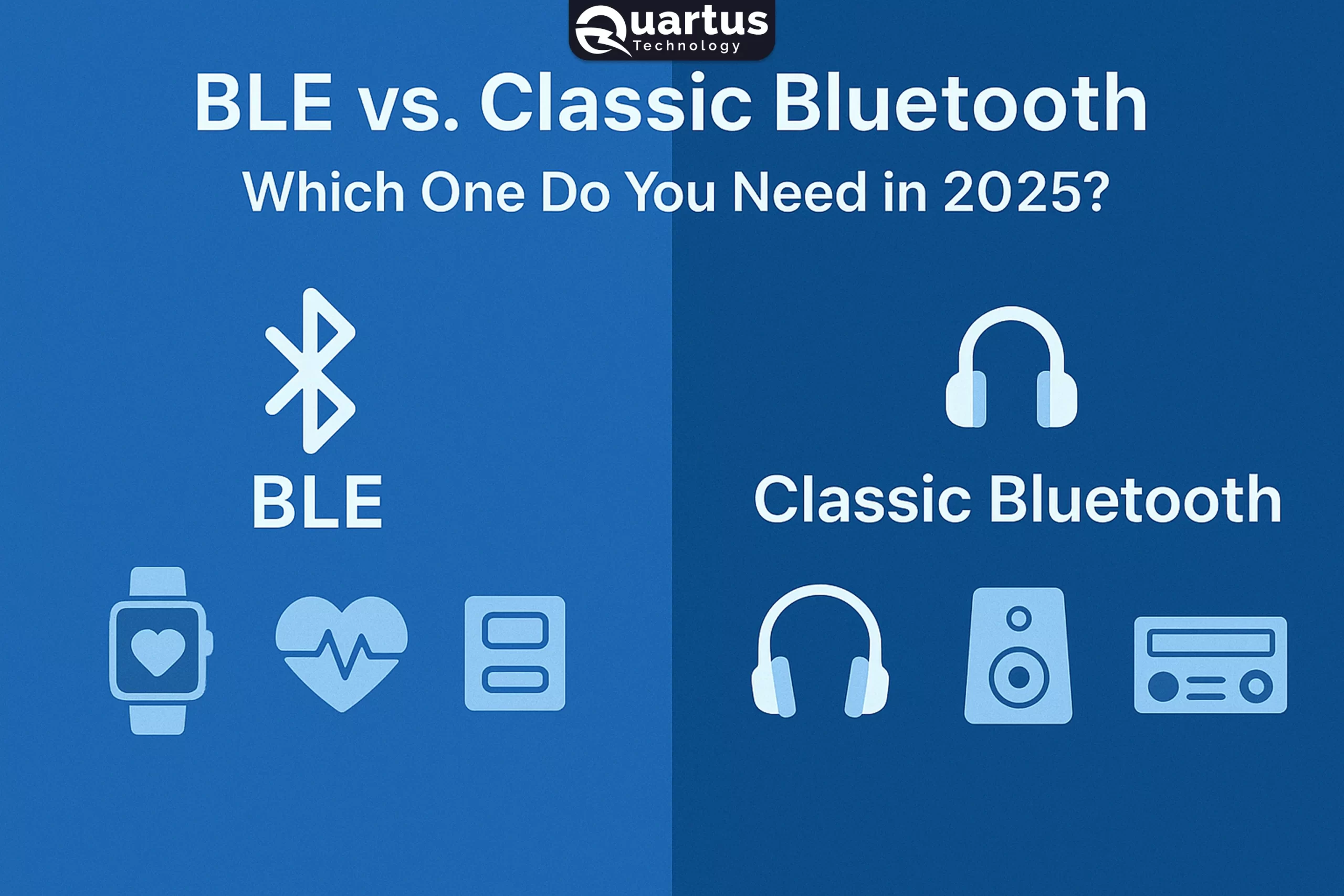
n today’s hyper-connected world, businesses and consumers demand faster, smarter, and more energy-efficient applications. This is where Bluetooth Low Energy (BLE) steps in as a game-changer. Unlike traditional Bluetooth, which focuses on continuous data streaming, BLE is designed for low-power, high-efficiency communication—making it the backbone of next-generation mobile and web applications.
As we move through 2025, BLE is not just a feature—it’s becoming a necessity for modern app development. Let’s explore how BLE is powering innovation across industries.
1. Ultra-Low Power Consumption
One of BLE’s biggest advantages is its energy efficiency. Mobile and IoT devices powered by BLE can run for months—or even years—on a single coin-cell battery.
- Mobile Apps: BLE ensures that apps like fitness trackers, location-based services, and mobile wallets don’t drain device batteries.
- Web Apps with BLE APIs: Progressive Web Apps (PWAs) now leverage BLE APIs to communicate directly with nearby devices, without needing heavy background processes.
This makes BLE ideal for always-on applications that require real-time data without compromising battery life.
2. Seamless IoT Integration
IoT is at the core of modern digital transformation, and BLE is its connectivity hero.
- Smart Homes: BLE-enabled mobile apps can control lights, thermostats, and locks with just a tap.
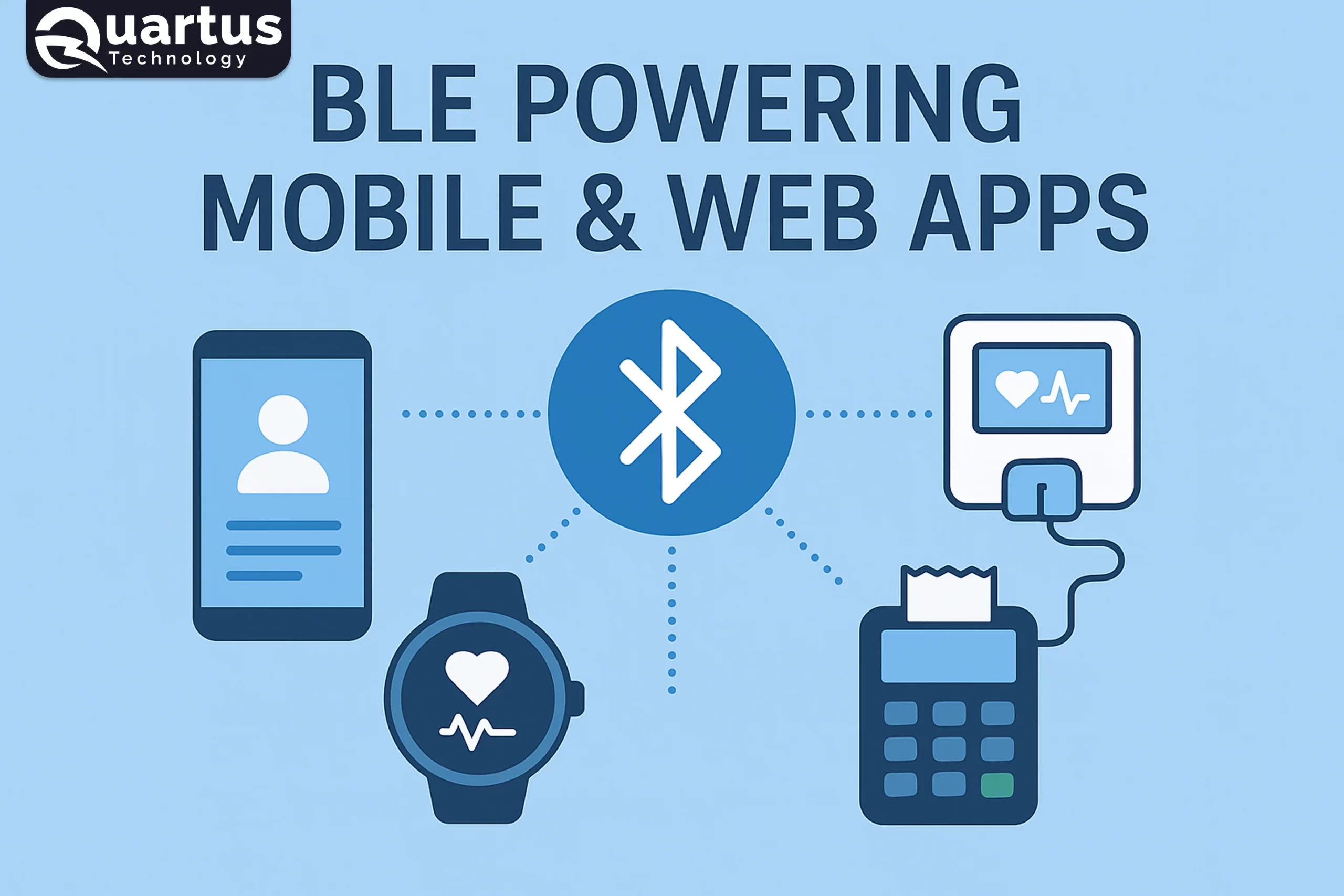
- Healthcare: BLE allows wearables like heart-rate monitors and glucose trackers to send data directly to apps, empowering real-time health management.
- Retail & POS: Web-based BLE apps are being used for contactless payments, smart inventory tracking, and personalized in-store experiences.
The ability of BLE to connect multiple devices simultaneously makes it a perfect match for IoT ecosystems.
3. Location & Proximity Services
BLE beacons have unlocked new possibilities in location-based mobile and web applications.
- Retail Apps: BLE-powered apps send personalized offers when customers walk near a product.
- Hospitality: Hotels use BLE apps for keyless room entry and indoor navigation.
- Events & Stadiums: BLE-powered apps enhance fan engagement with real-time updates, seat navigation, and contactless ticketing.
The accuracy of BLE location tracking (within a few meters) enables context-aware mobile experiences that were once impossible.
4. Faster & Secure Connections
BLE offers instant pairing and encrypted communication, making it suitable for mission-critical applications.
- Healthcare apps rely on BLE for secure patient data transmission.
- Enterprise apps use BLE for device authentication and workforce tracking.
- Financial apps integrate BLE for contactless transactions, ensuring both speed and security.
In a time when cybersecurity is a priority, BLE ensures that businesses can deliver trustworthy digital experiences.
5. BLE in Next-Gen Web Applications
Web developers are now leveraging the Web Bluetooth API, which allows browsers to communicate directly with BLE devices.
This means:
- Users can connect wearables, sensors, or POS machines directly through their browser.
- Businesses can build cross-platform BLE applications without forcing users to download heavy apps.
- Developers can deliver real-time BLE-enabled dashboards for industries like logistics, healthcare, and manufacturing.
This integration is shaping a new era of lightweight, scalable, and device-connected web applications.
The Future of BLE in Mobile & Web Development
With the arrival of Bluetooth 5.3 and beyond, BLE is faster, more reliable, and capable of supporting even larger device networks. Its role in IoT, healthcare, retail, and smart mobility is only expected to grow.
Mobile and web developers who adopt BLE today are building solutions that are energy-efficient, scalable, and future-proof.
Conclusion
BLE is no longer just a connectivity option—it is the driving force behind next-gen mobile and web applications. From powering IoT devices to enabling secure financial transactions and enhancing user experiences with proximity services, BLE is reshaping the digital landscape in 2025.
At QuartusTech, we specialize in building BLE-integrated mobile and web applications that help businesses innovate faster and smarter. Whether you’re developing healthcare apps, POS solutions, or IoT ecosystems, our BLE expertise ensures your applications are ready for the connected future.